Bathroom Remodeling Advice
Shower Tile Choices for Florida Bathrooms

In this article
- Start with how the shower needs to work
- Choose a tile size for each surface
- Compare porcelain, ceramic and natural stone
- Decide between cement and epoxy grout
- Check grip and texture underfoot
- Plan niches, edges and trim together
- Make cleaning easier in a humid Florida bathroom
- Bring the choices into one plan
- Frequently asked questions
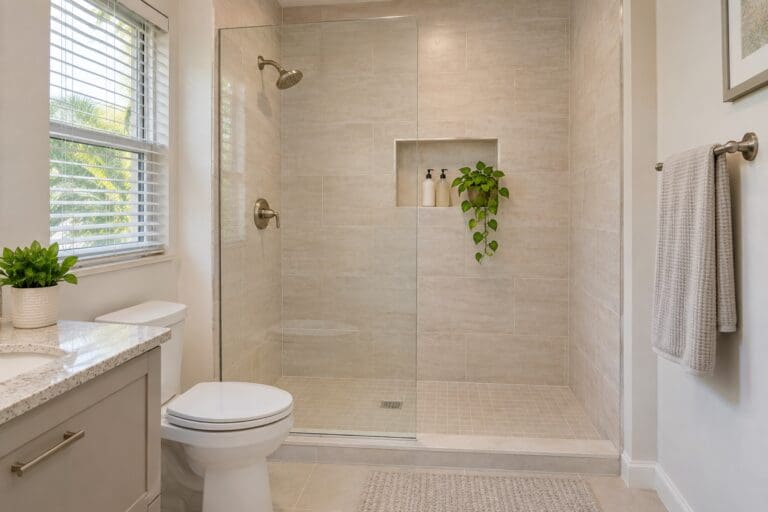
Shower tile ideas can look simple on a sample board and very different across an entire bathroom. Size, surface texture, grout and edge details all affect the finished room. They also affect daily cleaning and how the shower feels underfoot.
Homeowners in Flagler, Volusia and St. Johns counties also need to think about humidity and sand. Use this guide to narrow the choices before discussing your bathroom remodeling project and tile options.
Start with how the shower needs to work
Write down what bothers you about the current shower. The floor may feel slick. Grout lines may take too long to clean. Bottles may collect on a corner or ledge. The room may feel dark even during the day.
Next, note who uses the bathroom. A primary bathroom used every morning may need different storage and grip than a guest bath. Think about how many bottles need a place, whether anyone prefers a handheld shower, and which surfaces get the most water.
Start with function. Then compare materials and layouts that deliver the look you want.
Choose a tile size for each surface
Tile size changes the number of grout lines and the visual scale of the shower. Larger tile usually creates fewer joints and can make a wall look quieter. Corners, openings and fixtures still create cuts.
Smaller tile creates more joints. On a shower floor, those joints can add texture underfoot and allow the tile surface to follow the floor’s slope more easily. Mosaics are common for that reason. The exact product still matters because a glossy mosaic is not automatically a good floor choice.
Before selecting a format, ask to see a layout that accounts for:
- The wall width and height
- The location of fixtures
- The niche size and position
- Corners and outside edges
- The transition from wall tile to floor tile
- The number and location of narrow cuts
Compare the shower plan with bathroom vanity choices so the finishes do not compete.
Compare porcelain, ceramic and natural stone
Porcelain and ceramic are both made from clay and fired. Porcelain tile is generally denser and absorbs less water than standard ceramic tile. It is widely used on shower walls and floors, but every tile has its own approved applications. Check the product information rather than relying on the material name alone.
Ceramic tile comes in many colors, shapes and glazed finishes. Some products are not intended for shower floors, so confirm where the selected tile can be used.
Natural stone has variation that comes from the material itself. Pieces may differ in color, veining and texture. Some stone is more absorbent or sensitive to certain cleaners than porcelain or glazed ceramic. It may need sealing and a care routine suited to that stone. If you want stone, ask what maintenance the specific material requires before choosing it.
| Material | Useful qualities | Questions to ask |
|---|---|---|
| Porcelain | Dense, low water absorption, many looks | Is this product approved for the planned wall or floor? |
| Ceramic | Broad range of glazed colors and shapes | Is it rated for this wet location and surface? |
| Natural stone | Natural color and pattern variation | What sealing and cleaning does this stone need? |
Decide between cement and epoxy grout
Grout affects the appearance and care of a shower. Color can blend with the tile, soften contrast or make the layout more visible. A light grout with dark tile outlines every joint. A close color match makes the pattern quieter.
Cement grout is a common choice. It is porous unless the product has additives or receives the recommended treatment. It can absorb moisture and stains more readily than epoxy grout. Care instructions vary by product, so ask what cleaning and sealing routine applies.
Epoxy grout uses resin and a hardener rather than cement as its binder. It is less absorbent and more resistant to many stains than standard cement grout. It also costs more as a material and requires careful installation. Those differences make it worth discussing for a frequently used shower, but it is not automatically the right choice for every tile.
Grout joint width must work with the selected tile and its size variation. The dimensions and layout determine what is practical.
Check grip and texture underfoot
Shower floor tile should be selected for wet use. A rough-looking surface is not proof of grip, and a product that works on a bathroom wall may not be suitable underfoot.
Review the manufacturer’s stated use and available slip-resistance information for the exact product. Also touch the sample. Deep texture can add grip, but it may catch soap residue and take more effort to scrub. A very smooth surface may be easier to wipe yet feel less secure when wet. The goal is a workable balance.
Consider bare feet, not only shoes. If sand often enters the bathroom after beach trips, choose a surface and grout color that can handle frequent rinsing and cleaning without making every grain the visual focus.
For the rest of the room, coordinate shower tile with flooring choices that suit the adjacent space.
Plan niches, edges and trim together
A niche is part of the tile layout, not an accessory to decide at the end. Its height, width and shelf arrangement should match what you store. Oversized bottles need more clearance than bars of soap. A shared bathroom may need more than one shelf.
The niche also creates inside and outside edges. Decide how those edges will finish before ordering tile. Options may include coordinating trim pieces, metal profiles or carefully finished tile edges, depending on the tile line and design. Not every tile collection includes every trim shape.
Outside corners, doorway edges and transitions need the same attention. Confirm the trim color, profile and quantity with the main tile.
Make cleaning easier in a humid Florida bathroom
Florida humidity can slow drying, especially in a bathroom with limited airflow. Regular cleaning and drying habits still matter with any tile. Run the room’s exhaust fan when the shower is used if one is present, and leave space for wet surfaces to dry.
Use cleaners that are compatible with the tile, grout and any metal trim. Acidic or abrasive products can harm some stone, grout or finishes. When in doubt, follow the care instructions for the exact materials.
Fewer joints reduce the grout to scrub, but soap film and mineral deposits can still show. Mid-tone colors and subtle patterns often make water marks less noticeable than a dark, glossy finish.
A small squeegee can remove water left on walls or glass. Wiping the niche shelf also keeps water from sitting around bottles. These habits are useful across Palm Coast and nearby coastal communities.
Bring the choices into one plan
Choose the floor tile first if grip is the hardest requirement. Then coordinate wall tile, grout and trim. View the pieces together, both wet and dry, because water can deepen colors and change sheen.
Ask these questions before the order is finalized:
- Is each tile approved for its planned surface?
- What grout type and color will be used?
- How will the niche and outside edges be finished?
- Where will full tiles and cut tiles land?
- What care does each material require?
If the shower is part of a larger room update, review the tile beside the vanity top, cabinet finish, wall color and main floor. Our guide to choosing samples at home explains how to compare them in your own light. You can also read about waterproof flooring choices for Florida homes when planning the bathroom floor outside the shower.
Frequently asked questions
Is large tile a good choice for a shower wall?
Yes, when the exact product is approved for that use and the wall layout works with its size. Large tile creates fewer grout lines, but openings and corners still need planned cuts.
Is porcelain better than ceramic in a shower?
Porcelain is generally denser and less absorbent than standard ceramic. Both can work in a shower when the selected product is approved for the specific wall or floor location.
Does epoxy grout need less care?
Epoxy grout is less absorbent and more resistant to many stains than standard cement grout. It still needs routine cleaning, and the tile itself may have separate care requirements.
Should shower floor tile have a textured finish?
The floor needs a product suitable for wet use with appropriate grip information. Texture can help, but very deep texture may take more effort to clean. Review both the rating and the sample.
How do I choose a grout color?
Decide whether you want the tile pattern to stand out or read as one surface. Test the grout color beside the tile in the bathroom, since daylight and warm evening bulbs can shift how both colors look.
Ready to compare shower tile for your bathroom? Call DMT at (386) 780-5255 or send your project details. Tell us about the room, the surfaces you want to change and the materials you are considering.
Keep reading
More guides
Bathroom Remodeling Advice
Tub-to-Shower Conversion in Palm Coast: Questions to Settle Before the Tub Comes Out
Drain position, entry height, width and cleaning: questions before replacing a tub with a shower. Free in-home estimate in Palm Coast.
Flooring & Tile Advice
Waterproof Flooring in Florida: Luxury Vinyl Plank vs. Tile
Compare vinyl plank, porcelain or ceramic tile, and water-resistant laminate for Florida slab homes, pets, spills, heat and humidity.
Kitchen Remodeling Advice
Quartz Countertops in Florida: Humidity, Sun and Heat
Learn how quartz handles Florida humidity, direct sun, hot pans, seams, edges and daily cleaning before choosing a countertop.